
Dispatch · July 8, 2026 · 6 min · By Ulric Tavernier
Side effects of skin tightening: what can go wrong, and how often it does
Non-surgical tightening is marketed as risk-free. It is safe in trained hands, but the honest risk list is worth reading first.
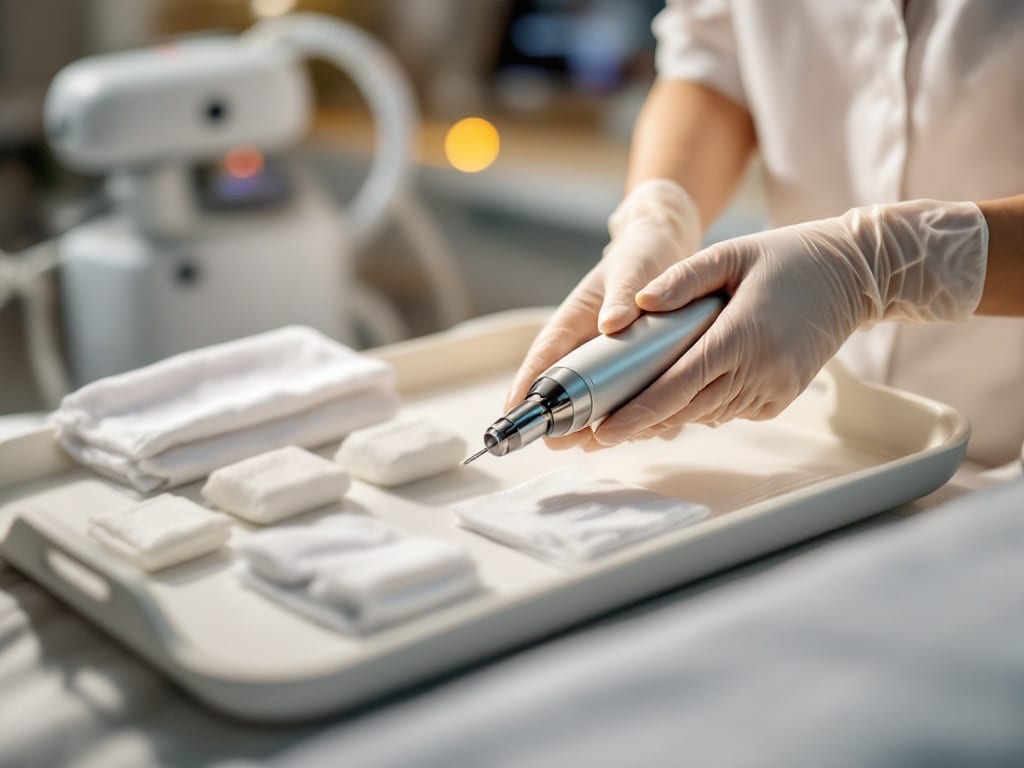
Non-surgical skin tightening is sold on having little downtime, and for most patients that is accurate. But little downtime is not the same as no risk, and the honest safety picture, common effects, rare problems, and who should hold off, is exactly what a good consultation should cover before any package is quoted.
The common, expected effects
Most of what happens after treatment is mild and brief. Radiofrequency treatments typically leave redness, warmth, and mild swelling for a few hours to a couple of days, and microneedling RF adds pinpoint marks and a day or two of rough texture. Focused ultrasound commonly causes tenderness when pressing on the treated area for days to a few weeks, and occasional temporary numbness or tingling along treated lines. These are the ordinary cost of doing business with heat-based collagen stimulation, not complications.
The uncommon but real ones
Rarer problems deserve plain language. Energy devices used at aggressive settings, or by inexperienced operators, can cause burns and blisters that may scar. Pigment changes, both darkening and lightening, are a particular consideration for deeper skin tones, where device choice and settings matter more and an experienced provider is worth insisting on. Focused ultrasound can occasionally cause temporary nerve irritation, felt as tingling or brief weakness that resolves over weeks. Early generations of deep-heating devices at heavy settings were associated with rare cases of fat loss under the skin, leaving a slight hollow; modern protocols have made this uncommon. Thread lifts carry their own list: puckering, asymmetry, visible or palpable threads, and occasional infection.
The operator matters more than the device
A consistent theme runs through the complication reports: outcomes track the hands more than the machine. Correct depth, sensible energy settings, knowledge of facial anatomy, and honest patient selection prevent most problems. This is why who performs the treatment, and their training and supervision, is a better question than which brand of device the clinic bought.
Who should hold off
Some situations call for postponing or skipping treatment: pregnancy, an active skin infection, rash, or acne flare in the treatment area, a recent deep resurfacing procedure still healing, and, for radiofrequency, certain implanted electrical devices. Recent filler in the same area is worth disclosing so the provider can plan around it. None of this is exotic; it is the screening a careful clinic does unprompted, and the questions worth asking at a consultation will surface whether they do.
The takeaway
In trained hands, the safety record of mainstream skin tightening is genuinely good, and the typical experience is a few days of redness or tenderness on the way to a modest result. The risks that exist are mostly avoidable ones, concentrated where settings are aggressive, screening is thin, or experience is lacking. Choose the provider as carefully as the treatment, disclose your history, and treat any clinic that waves off the question of risks as a reason to keep looking.
Related reading: What to expect at a skin tightening consultation, and the questions worth asking.
Further reading: Global Consensus Guidelines for the Injection of Diluted and Hyperdiluted Calcium Hydroxylapatite for Skin Tightening (Dermatol Surg 2018); Ultrasound skin tightening (Dermatol Clin 2014); Monopolar radiofrequency for skin tightening: our experience and a review of the literature (Dermatol Surg 2014).